
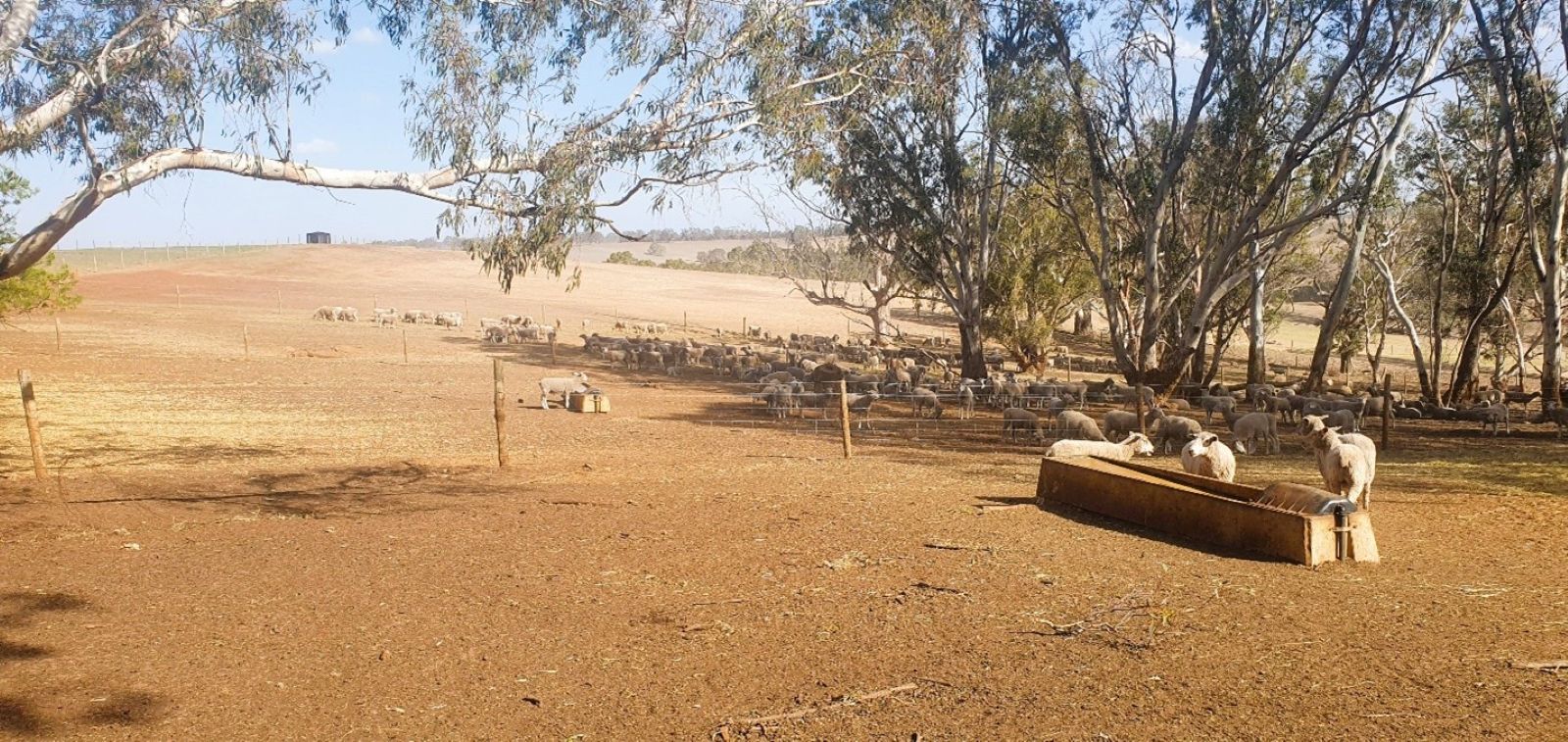
Consideration of wet weather management in stock containment design
While containment feeding is frequently associated with dry conditions, it was the issue of wet weather conditions that were causing concerns for the McLean family. Bobbie and Angus McLean with their three teenage daughters farm 1220 ha at Harrow and Coojar in the Western District of Victoria.
They use containment yards for their prime lamb enterprises when feed runs out in summer and autumn to save pasture, protect their perennial pastures and keep groundcover on hills.
“Harrow is extremely hilly and has a light sedimentary soil type. It’s difficult to keep groundcover on the tops and sides of hills,” said Bobbie.
In 2016, they first built three containment yards because of dry conditions and the lack of paddock water. They then added another three. Fast forward to 2024 and they started building another six pens and thought carefully about their design.
Experience had taught them that when it does rain, the soil type being a sandy loam does not form a hard pad even under the high stock densities experienced within the pens. This means the pens can become muddy when its wet and dusty when its dry.
Click here to read the rest of the case study, published part of the MLA Innovative Mixed Farming project.
Image – Sheep in containment, 7th May 2025 (Provided).
The Innovative Mixed Farming project is funded by Meat & Livestock Australia.