
Large Stubble Loads
In the High Rainfall Zone large stubbles are an issue and how to manage them at harvest and sowing is being investigated though a GRDC funded project.
Now in its’ second year of trials (2024-25), the GRDC large stubble loads project aims to compare different seeder types and stubble management techniques across a range of crop types. In 2023-24 the trials looked at faba beans sown into wheat stubble and barley sown into wheat stubble.
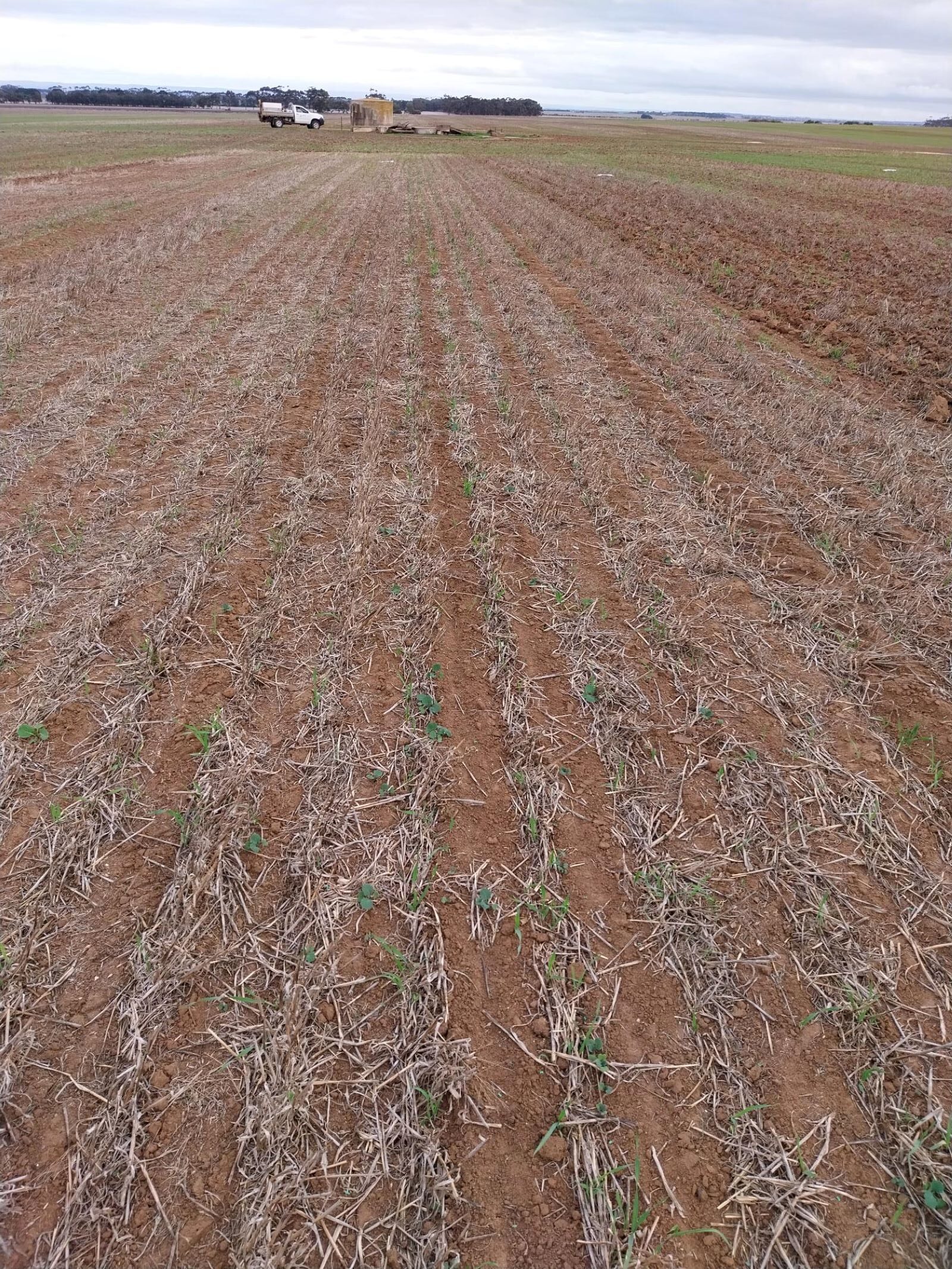
This year, a trial at Inverleigh is comparing disc and tyne seeders sowing canola with two different forms of stubble management (burnt vs retained left standing) into a barley stubble.
Results so far…
- Data from establishment shows canola had a harder time establishing in the standing stubble (retained) treatments.
- There was no significant difference in establishment between disc and tyne seeders.
- Yield data will determine if the canola in the retained treatments was able to compensate after the lower establishment.
In Tasmania, a trial will be established in the Spring, the trial area was sown to forage rape in autumn and will have two different residue management practices applied prior to sowing the Spring barley.
These treatments are grazing (removal of majority of residue) and green manuring (incorporated) which represent two common management practices for cover/forage crops when sowing a cash crop in spring.
Barley will be sown using two different seeder types – disc and tyne.
Assessments for the trials include establishment, soil moisture, pest and disease monitoring and assessments if necessary and yield. Keep an eye out for more results in the 2024 Results book in March 2025.
Image: Canola establishment across different stubble treatments at Inverleigh Source: SFS
By Audrey Gripper, Senior Research & Extension Office