
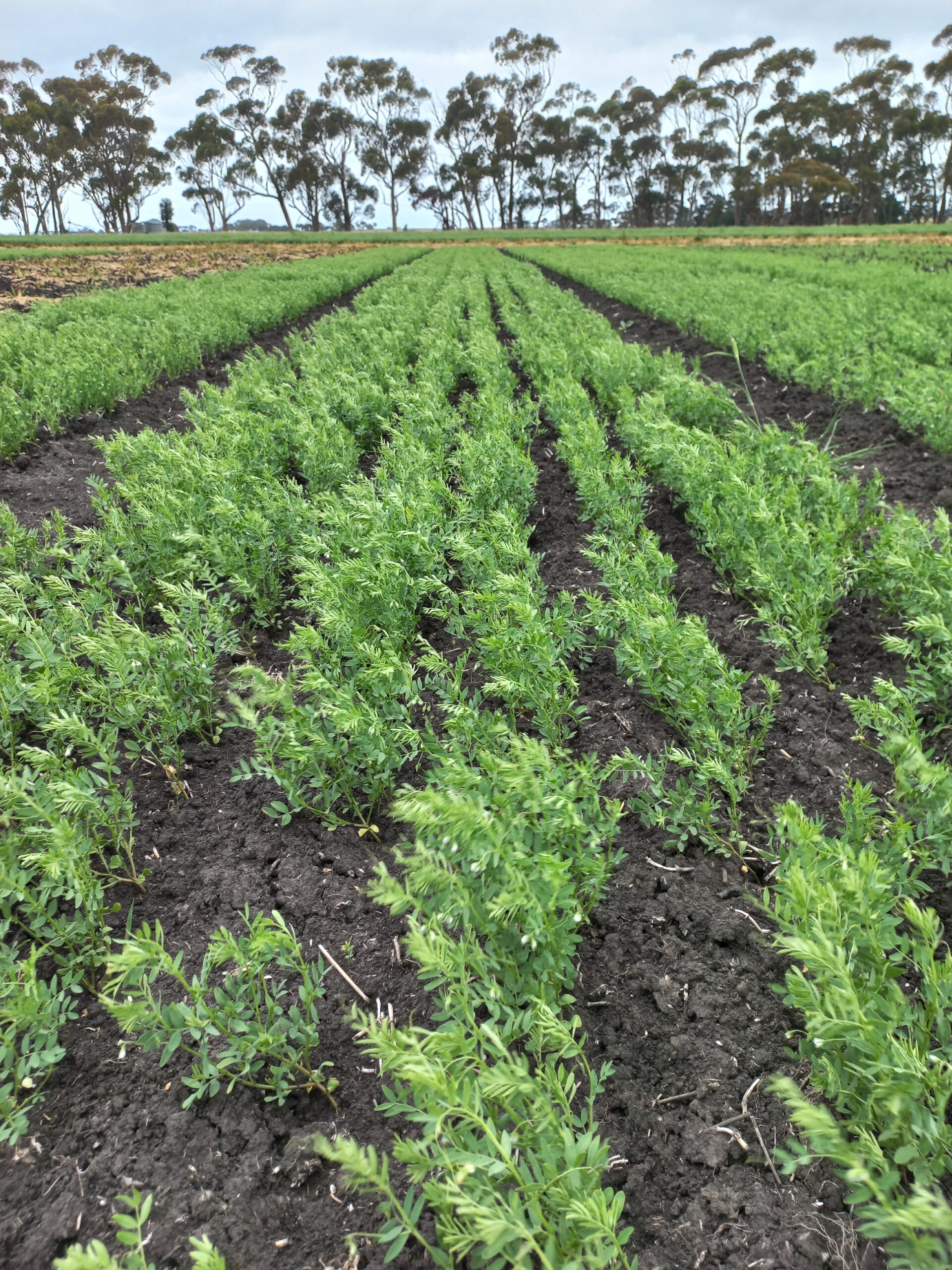
Spring Pulses Charging Ahead
This season, SFS is running three spring-sown pulse trials: chickpeas and lentils at Hamilton, and chickpeas at Streatham.
At Streatham, the trial is comparing two chickpea varieties—Royal and Magnus—under three fungicide strategies: nil, complete, and seasonal. Meanwhile, at Hamilton, in partnership with SARDI, we’re testing three chickpea varieties and six lentil varieties across three sowing dates: November 10, November 24, and December 8. While these dates were later than ideal due to operational delays, including seed supply, the trials are already delivering fascinating insights.
Following decile 9 rainfall at Hamilton in November and warmer, drier conditions through December, the pulses have surged ahead. On Christmas Eve, we assessed the first sowing (November 10) and found chickpeas forming flower buds and most lentil varieties already in full bloom—just six weeks after sowing! We’ll be monitoring closely to see how this rapid development influences yield and whether later sowings follow the same trend. Pulses can keep building biomass during flowering, but only if temperature and moisture conditions remain favourable.
At Streatham, chickpeas have also tapped into available moisture and begun flowering. The next few weeks will be critical, as heat stress during reproduction can cause flower abortion and reduce yield potential—above 32°C for chickpeas and 30°C for lentils.
When it comes to pulses, the rule of thumb is simple: the longer the flowering and podding period, the higher the yield. Here’s hoping for mild conditions and no heatwaves as these trials progress!
Article Written by Max Wagner, SFS Graduate Research & Extension Officer
Image: Flowering observed at Hamilton 24-12-25 Source: M Wagner, SFS.