
Moisture Matters – The year so far in South West Vic…
The SFS VIC autumn sowing program kicked off last week, starting with winter wheat at Streatham.
Recent rainfall has given many growers across the South-West a bit of confidence to get into the paddock, so it’s an interesting time to look back at how our current position compares to the last couple of years.
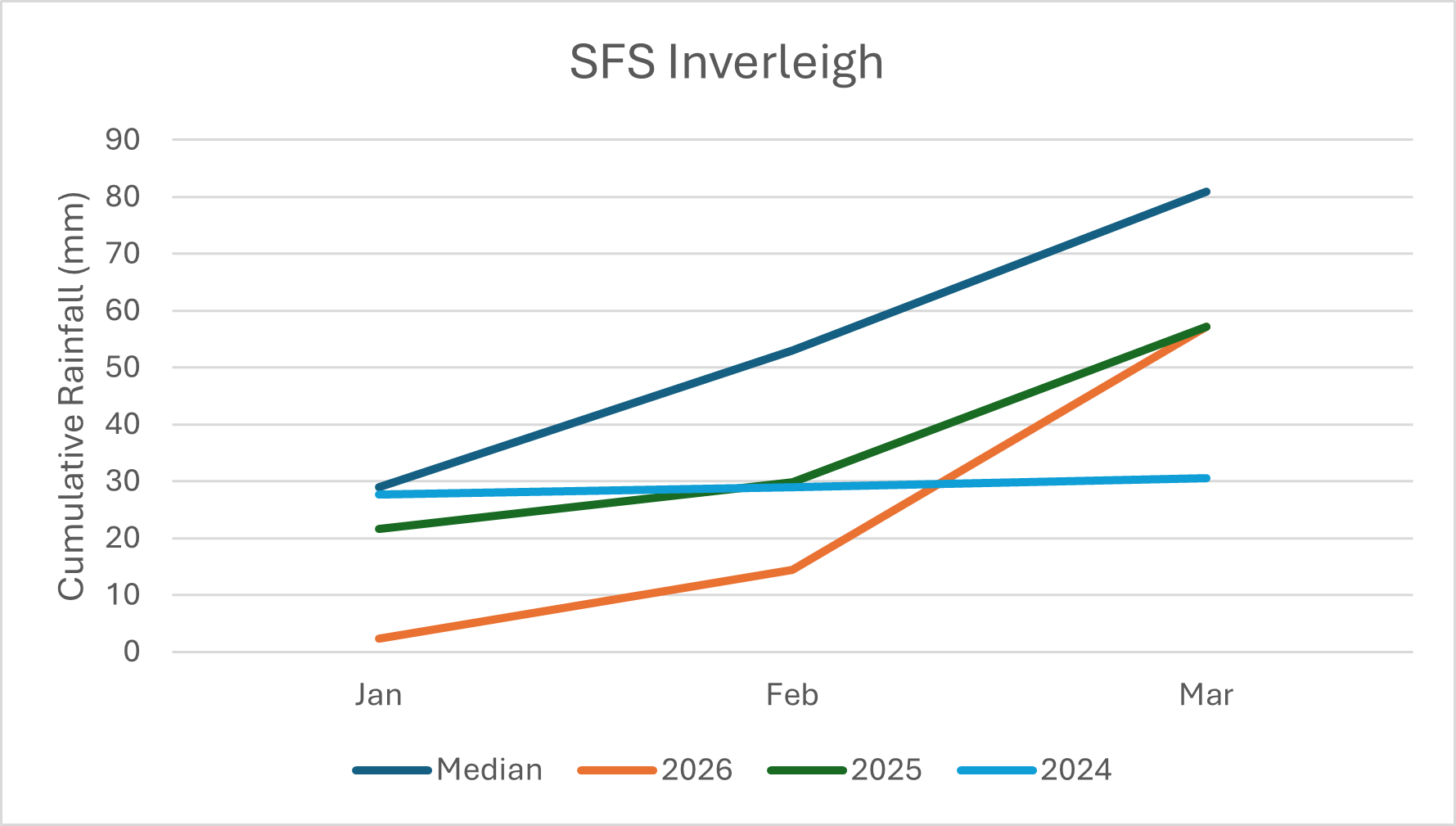
Figure 1 shows cumulative rainfall at our Inverleigh trial site from January to March in 2024, 2025, and 2026, compared to median rainfall. The data sourced from our trial site weather station.
What is it telling us?
The dark blue line is the median, 2026 orange line, 2025 green line and light blue 2024.
Whilst March has been much wetter than average with 42.8mm of rain, the cumulative rainfall has only caught up to the 2025 Jan-Mar total. With all 3 years well below median rainfall. Recent showers have provided enough top-soil moisture to start sowing, but it’s worth considering what your sub-soil moisture might look like after a drier than average December, January, and February.
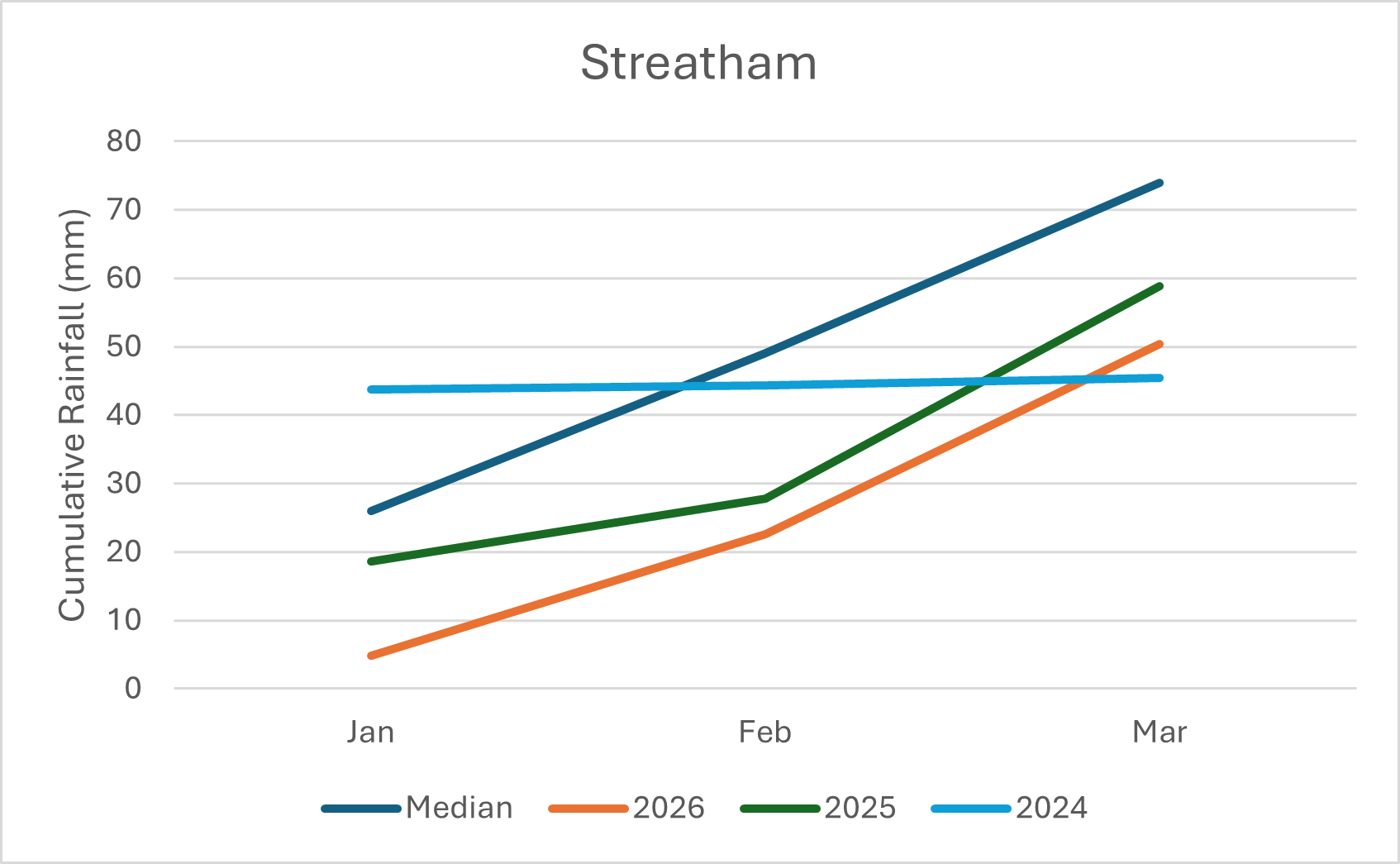
Data from the SFS Streatham trial site(Figure 2) tells a similar story. March rainfall on par with the Streatham median has provided a much-needed boost heading into sowing, but Jan-Mar totals remain about 24 mm below the median and 8 mm below 2025 totals.
Thoughts?
In 2025 a drier start can be quickly turned around by a wet spring, but as it stands the long-term forecast suggests a cautious approach might be warranted. The Bureau of Meteorology is forecasting a drier-than-usual 3-month period from April to June, with the chance of exceeding median rainfall at around 25% or less. As confirmed in the latest issue of The Fast Break, with Dale Grey’s assessment of 12 global model forecasts pointing towards a drier, or at best neutral, autumn.
Recent rainfall is a welcome sight as we head into sowing, however it is useful to view it in context with previous seasons and the long-range forecast. Fingers crossed the rain continues, and wishing everyone a safe and successful sowing period.
By Max Wagner, Graduate Research & Extension Officer