
Harvest Weed Seed Control in the HRZ
A valuable late-season cultural weed control tactic to reduce annual ryegrass seed set is Harvest Weed Seed Control (HWSC). HWSC strategies capture or destroy weed seeds at harvest, minimising the reliance on pre and post-emergent herbicides and therefore reducing risk of herbicide resistance.
While HWSC has proven to be highly effective in many Australian cropping regions, efficacy is slightly lower in the High Rainfall Zone (HRZ) due to the long growing season and extended harvest period. In this region, 50% of annual ryegrass seeds can shed before cereals are able to be harvested, therefore a realistic target for ryegrass seedbank reduction in the HRZ is 30% with HWSC.
The most common HWSC strategies in Australian cropping systems include chaff carts, narrow windrow burning and impact mills.
Chaff carts towed behind headers collect chaff and weed seeds, dumping them in piles for grazing or burning. Studies have shown that only 3-6% of ryegrass seed remains viable after passing through the rumen after grazing.
Narrow windrow burning (NWB) involves a chute attached the rear of the header, allowing the formation of a narrow 500mm windrow that can be burnt the following autumn, displaying up to 99% weed seed control in some conditions.
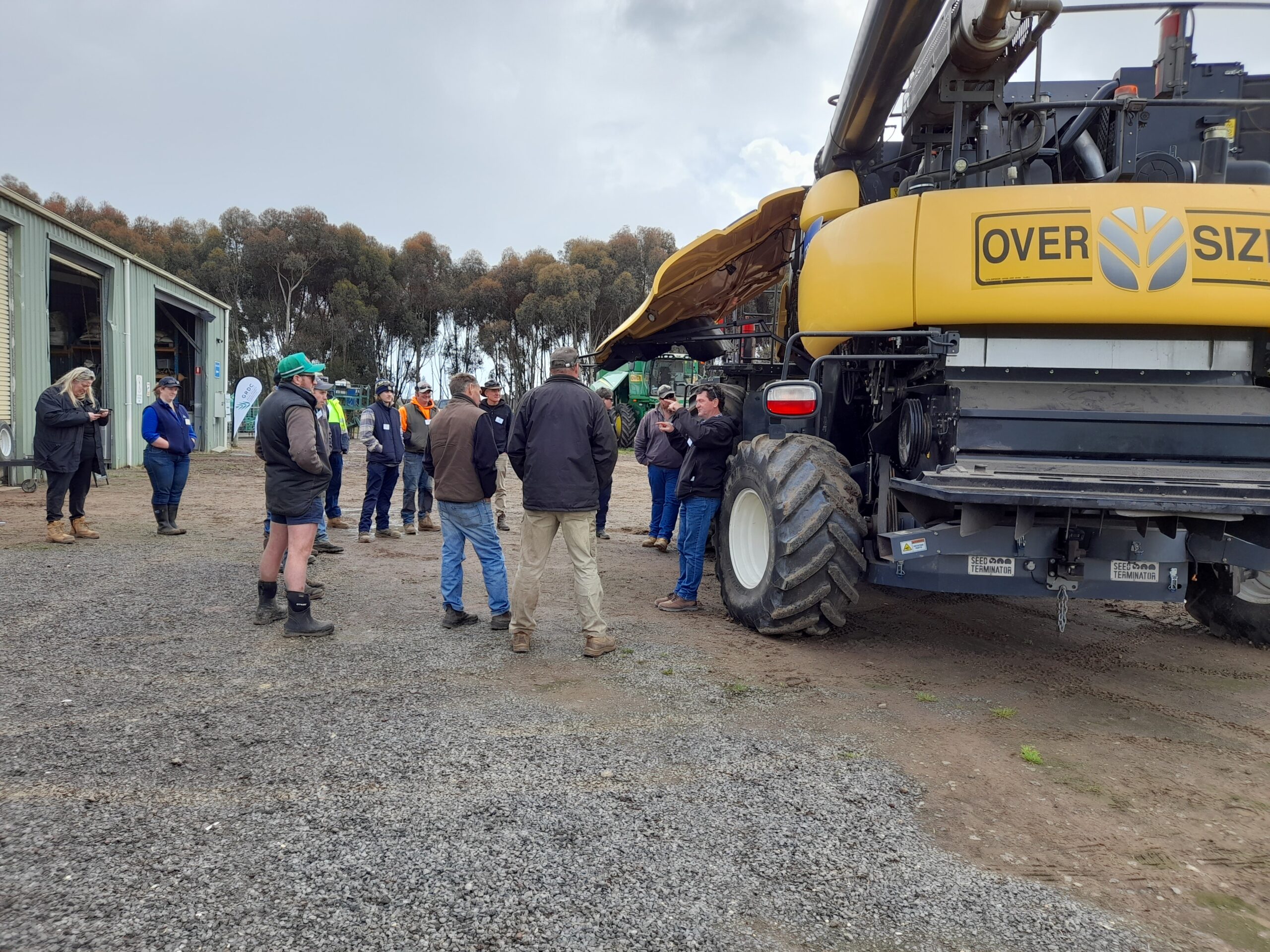
Impact mills such as the Seed Terminator, mounted to harvesters have been widely adopted in southern Australia, crushing weed seeds at a high velocity during harvest to achieve 96% destruction of ryegrass seeds. Material is then spread back onto the paddock to retain nutrients.
HWSC tactic success relies on a four key factors – the efficacy of the HWSC technology, weed species must retain seed in seed head before rather than shedding, the weed must remain upright after maturity, and the harvester must be set up to prevent weed seeds from being missed inside the machine.
Although only 30% of ryegrass seeds are captured/destroyed, HWSC tactics can be profitable in the HRZ given the high yield potential of the region. Small plot trials have shown that in systems where weeds are largely under control, HWSC technologies must cost $34/ha or less in extra costs to remain viable. Where as in HRZ systems with herbicide resistance, HWSC can cost more than this and still be profitable.
For further information about HWSC tactics, considerations and efficacy in the HRZ, take a look at some GRDC resources such as the update paper, ‘Harvest weed seed control – beyond windrow burning’ (Condon,2018) and ‘Harvest Weed Seed Control for the Southern High Rainfall Zone(2019)’ to help get on top of your weeds in seasons ahead.
By Cam Barr, Graduate Research & Extension Officer