
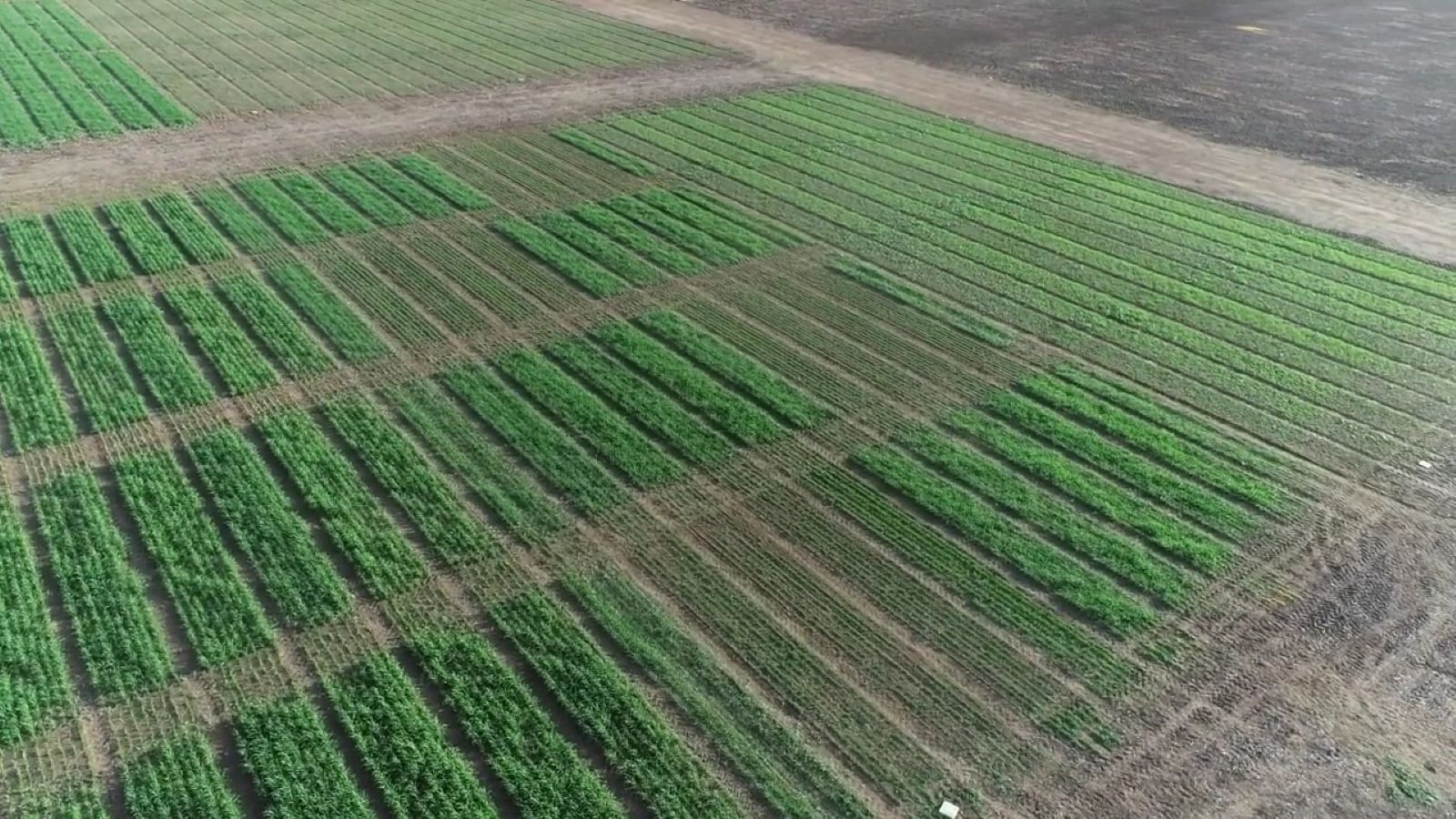
Cereals for Grazing – Variety x Management trials underway
The Southern Farming Systems Variety x Management trials are well underway in 2026. This year, we’re looking at the effect of grazing cereal crops on biomass production, yield, grain quality, and margins.
Five trials have been established at the SFS Streatham trial site with spring and winter wheat, spring and winter barley, and oats. Each trial includes up to four varieties with a mix of established varieties, new commercial varieties, and promising breeder lines.
Last week, the team completed the first simulated grazing of the winter wheat, winter barley, and oats trials with as much as 1t DM/ha taken off some treatments grazed down to 5 cm. The plots will be grazed up to one more time before reaching GS 30, where further grazing would damage the plant’s growing point and penalise yield.
Grazing cereal crops potentially has a unique fit in the high rainfall zone with our long season and increasingly earlier sowing times.
It has the potential to provide the dual benefits of filling a winter feed gap for livestock operations, while also improving gross margins for cereal crops. It is also expected to have impacts on growth habit and plant architecture with implications for harvestability, water and nitrogen use efficiency, and disease susceptibility.
While research into cereal crop grazing is not new, these trials will produce valuable data and information on the suitability of more modern varieties across multiple crop types.
Assessments will include biomass measurements, disease scores, lodging scores, grazing recovery, and grain quality.
Most importantly, we will assess gross margins at the end of the season to determine which crop types and varieties provide the best fit for mixed farming systems in the high rainfall zone.
Join us Wednesday 15 July, 10.00am at the Streatham Trial Site looking at these trials and so much more… Click here for more event information.
Considering grazing this winter check out Grazing Cropped Land Grain n Graze Guide here…
By Max Wagner, Graduate Research & Extension Officer