
Building Smarter, Stronger Farms for the Future
Southern Farming Systems (SFS) is delivering with the Corangamite Catchment Management Authority the Diverse Farms, Resilient Catchments project—an initiative focused on boosting diversity and resilience on farms, within communities and across the broader landscape.
This four-year project delivers six workshops, six awareness activities and six practical resources each year.
In 2026 so far SFS has delivered two highly interactive workshops attracting producers, advisors and industry representatives keen to future-proof their farming systems.
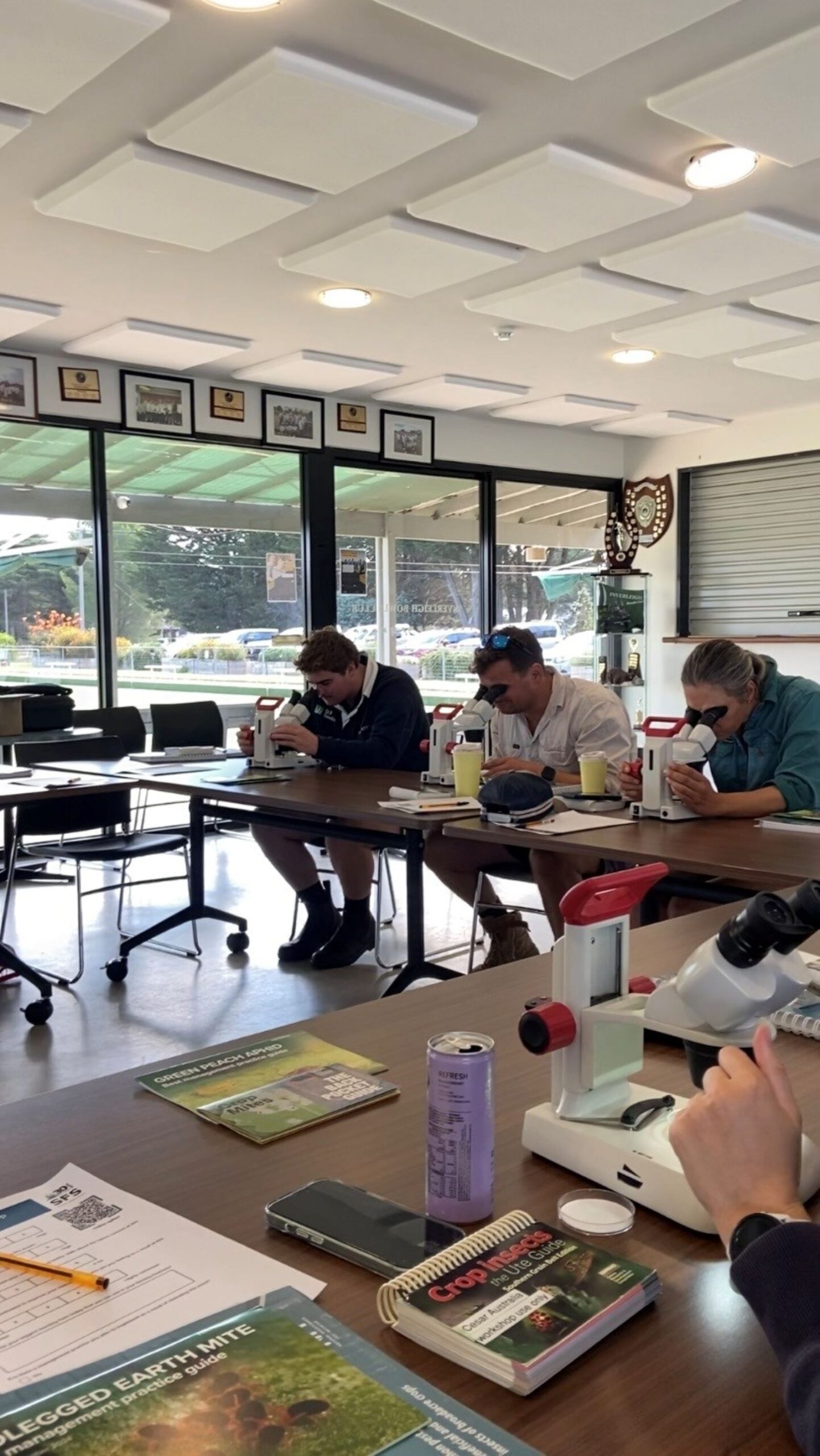
On 25 March, growers gathered in Inverleigh for a grain pest management workshop led by expert speakers from Cesar Australia. The session tackled key grain pests and emphasised the increasing challenge of chemical resistance. Bluegreen aphids, for instance, are now resistant to several commonly used chemical groups, highlighting the need for informed, data-driven spray decisions.
Participants explored tools such as TIMERITE, which predicts optimal spring spray timing to suppress red legged earth mite populations into autumn, and the Chemical Toxicity Table, helping growers choose products that protect beneficial insects. Encouraging these natural predators can reduce chemical reliance and support healthier farm ecosystems.
On 15 April, attention shifted to livestock production at Paul Meade’s Beeac property. With guest speakers Cam Nicholson and Simon Falkiner, participants examined feed efficiency using Paul’s precision feedlot—one of only 21 in Australia. The system tracks individual feed intake and weight gain via EID tags, even flagging potential health issues days before visual signs appear. Results showed striking differences in efficiency, with the best-performing animals eating 2.5 kilograms less feed per kilogram of weight gained, delivering both productivity and environmental benefits.
This project is supported by the Australian Government through funding from the Natural Heritage Trust under the Climate‑Smart Agriculture Program.
By Isabelle Fox, Graduate Research & Extension Officer