
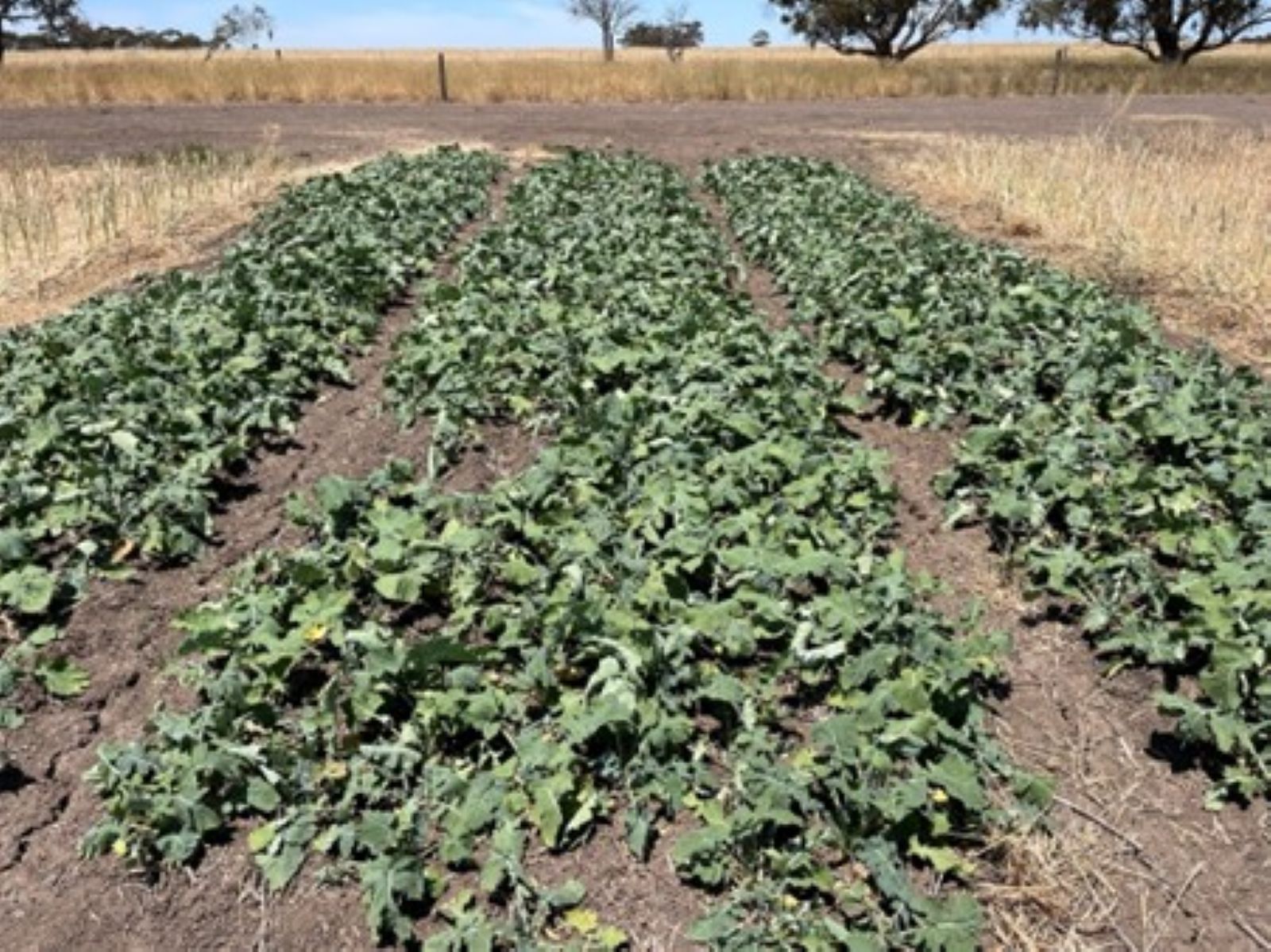
Spring‑Sown Winter Canola Showing Promise as a Dual‑Purpose Option
Opportunistic summer cropping continues to gain interest for its ability to provide valuable grazing, spread risk, lift income and deliver flow‑on benefits such as reducing waterlogging and slug pressure in following crops. While sorghum, lucerne and soybeans are commonly used in south‑west Victoria, spring‑sown winter canola is emerging as another promising option for mixed farming systems.
Winter canola is uniquely suited to this role because it will not flower until it has experienced sufficient winter temperatures (vernalisation). This allows the crop to be sown in spring, grazed through summer, and then recovered ahead of normal flowering and grain development in winter and spring. Importantly, grain yields are often comparable to traditional autumn‑sown canola.
Opportunities for spring sowing typically arise after hay crops, fallows or pasture phases. In the SFS Farming Systems South trial at Warrambeen, a dual‑purpose winter canola (AGF Captain) was sown in early November following a poorly established pasture. Benefiting from the region’s wet spring, the crop established strongly and produced around 1,500 kg DM/ha for its first graze in late January.
Spring sown winter canola also provides strong weed competition, with spring knockdowns and grazing helping suppress species such as annual ryegrass. However, knockdown spray options later in the season are limited once the canopy develops.
Pest pressure remains the main summer challenge. Hot, dry conditions increase the activity of cabbage moth and diamondback moth, which can rapidly reduce grazeable biomass. Frequent monitoring, timely grazing and rapid utilisation are essential. On the upside, spring sowing significantly reduces the risk of slug damage in autumn as plants are already established and less vulnerable.
By James Palmer, Research & Extension Officer