
90 Producers, Endless Insights – Feedbase Focus
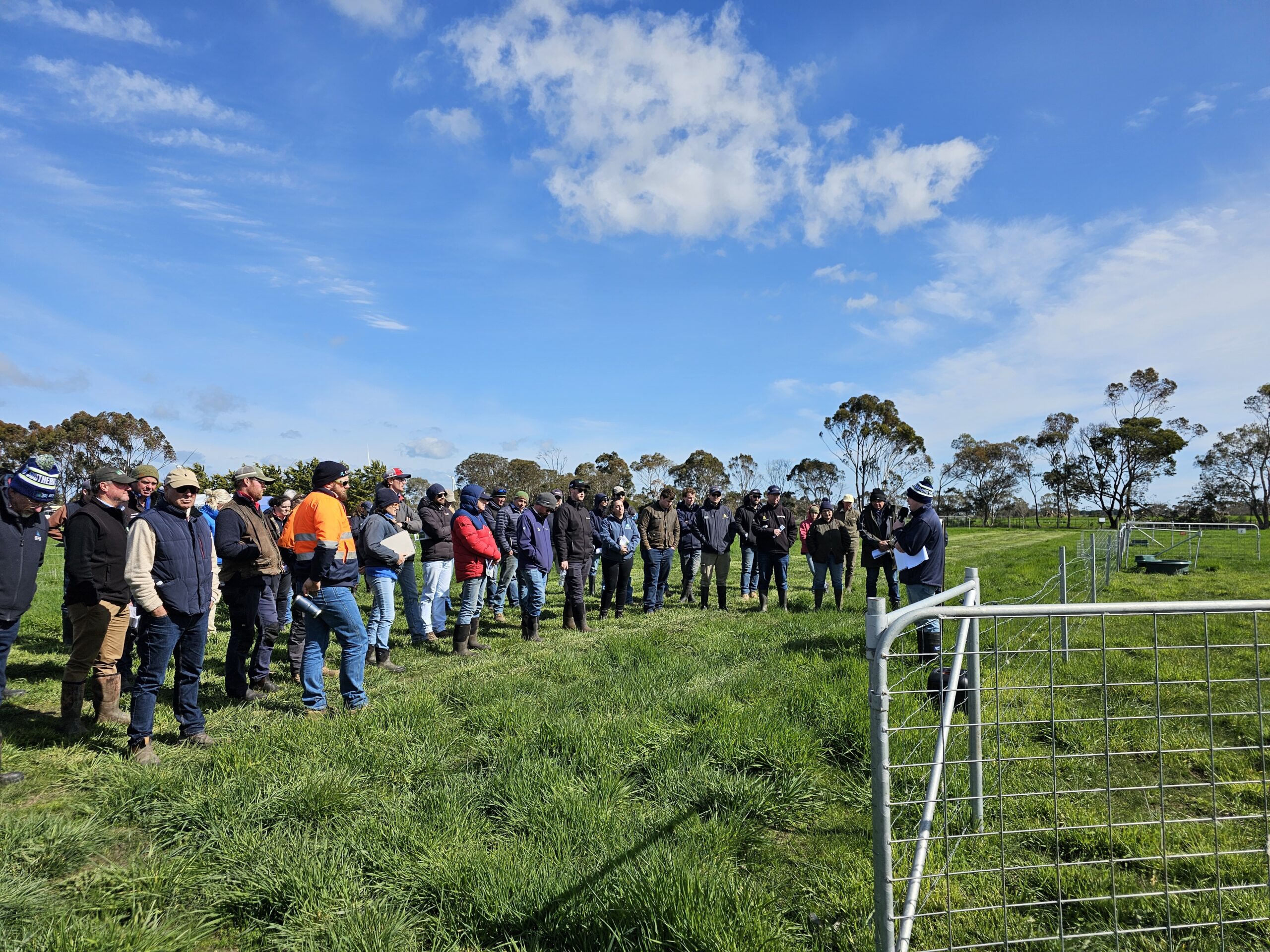
On Wednesday, 3rd September, Southern Farming Systems (SFS) hosted its annual Feedbase Focus field day at the Rokewood trial site, drawing over 90 producers and industry professionals from across the region. With a tough season behind them, attendees were eager to explore practical strategies for managing and rebuilding pasture feedbases from spring through to the autumn break.
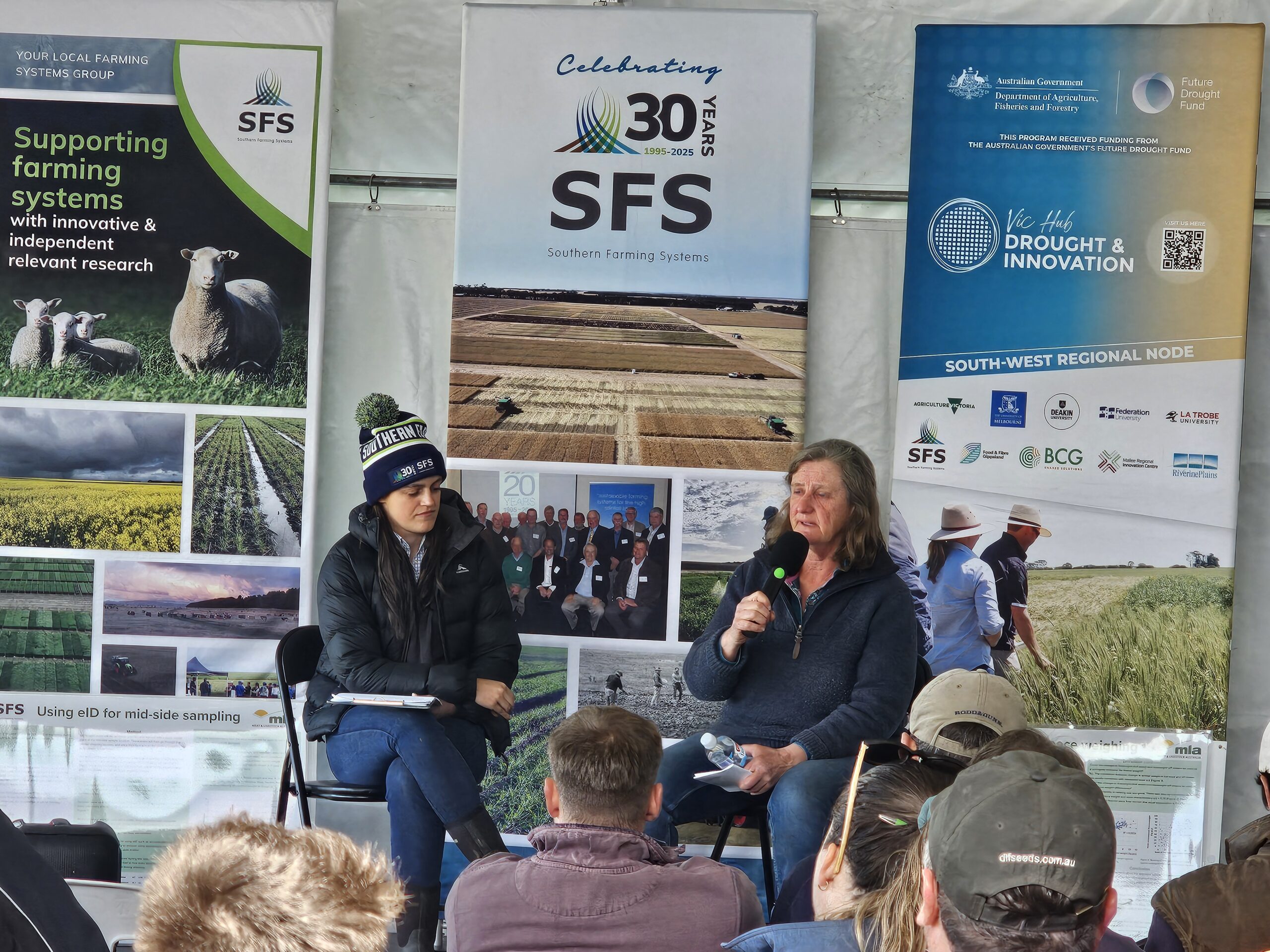
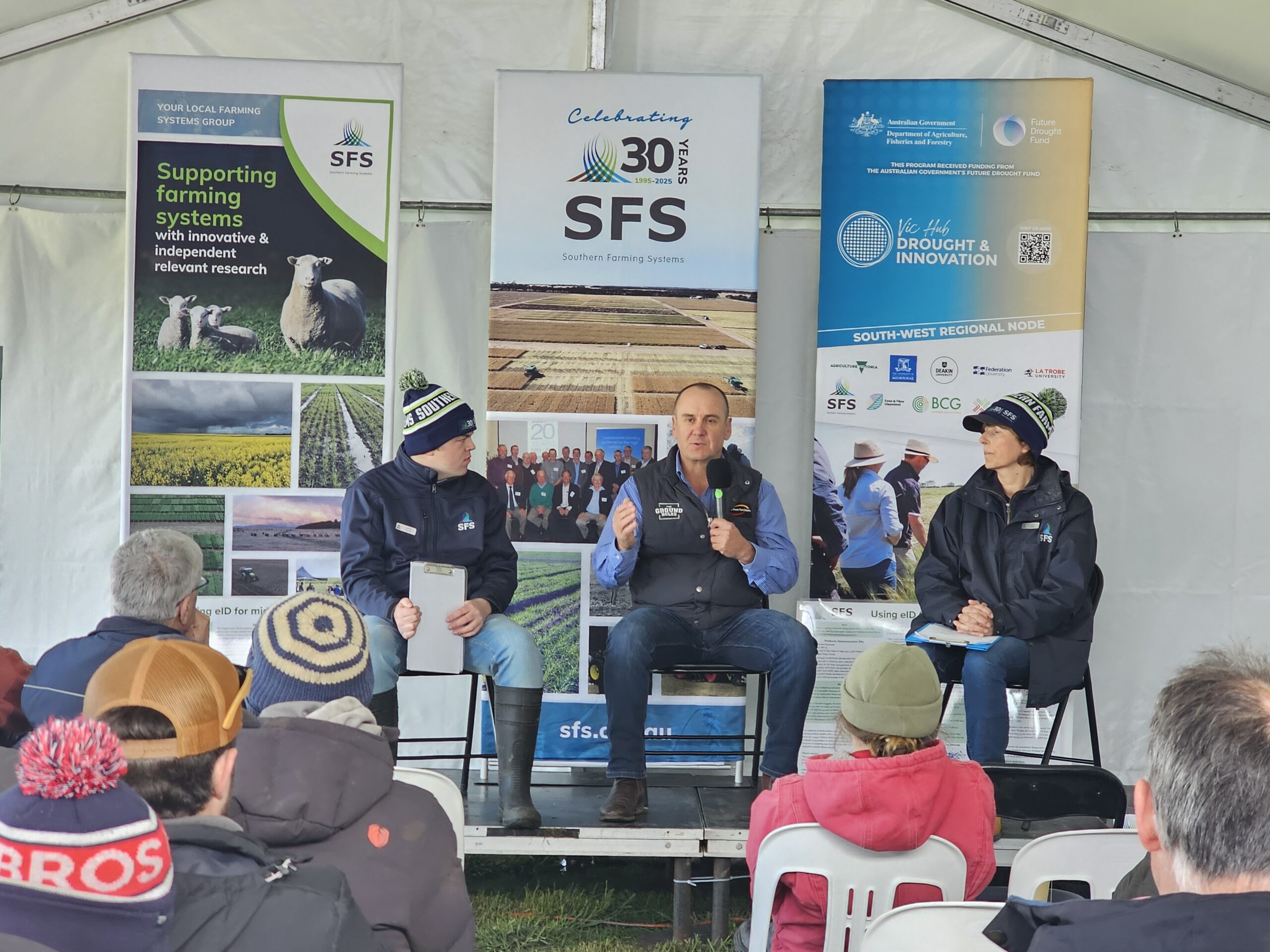
Led by Jessie Wettenhall, with support from Lisa Miller and James Palmer, the SFS team shared key insights from current trials, highlighting approaches to pasture resilience, grazing management, and fertiliser efficiency. The event also featured guest presentations, including Bellarine farmer Fiona Conroy, who discussed her use of electronic identification (eID) to enhance decision-making in sheep and cattle, and Lee Menhenett from Incitec Pivot, who provided expert advice on spring fertiliser strategies and nitrogen volatilisation.
Partner displays showcased the latest innovations in seed varieties and fertiliser products, adding further value to the day’s discussions.
“It was fantastic to see so many attendee’s from the region coming to gain practical insights and connect with fellow producers” said Bret Ryan, SFS CEO.
Key Trial Findings from Rokewood
Pasture Variety Trials
- Phalaris demonstrated the strongest production and persistence across two dry years across all pasture species, with all varieties yielding approximately 2t DM/ha in 2024.
- Winter-active tall fescue outperformed summer-active types, maintaining persistence into 2025, while summer-active varieties declined by 70% in plant numbers.
- Perennial ryegrass varieties showed a 30–60% decline in plant numbers over the past 12 months.
Drought Rebuilders Trial
- Annual ryegrass (ARG) mixes led performance in 2025, while brassica mixes struggled under dry conditions. Cereal mixes performed well when sown later.
- March-sown treatments yielded 300 kg DM/ha more than June-sown treatments.
- June-sown treatments had three times the plant establishment compared to March sowings.
Grazing and Fertility Trial
- Rotational grazing produced more dry matter (DM) than continuous grazing in 2024.
- Phalaris frequency declined under continuous grazing, with increased bare ground and undesirable species. In contrast, rotational grazing improved Phalaris frequency from 2022 to 2024.
- Olsen P levels above 15 mg/kg are recommended for optimal pasture growth when PBI exceeds 140.
Gibberellic Acid & Nitrogen in Phalaris Trial
- Applying Gibberellic Acid and Easy N to Phalaris in winter 2025 resulted in an additional 1t DM/ha.
- The cost-effectiveness of Gibberellic Acid was notable: 8 cents per kg of additional DM compared to $2 per kg with Urea.
For more details on the Rokewood pasture trials and access to resources, visit:🔗 https://sfs.org.au/pasture-livestock/resources
By James Palmer, Research and Extension Officer
Images: Feedbase Focus Source: M McClure, SFS