

Oversowing Pastures
After a dry 2024 and a poor start to 2025, some pastures may be looking a little sparse. After using the Pasture Paramedic Tool, the assessments may have left you with the result “Consider oversowing or resowing”. This article is going to touch on oversowing options.
When oversowing, only use vigorous plants such as perennial ryegrass, sub clover or a cereal. This is to ensure it can compete with the existing pasture species.
Below, we will look at two scenarios – high pasture competition vs poor pasture competition.
Likely high competition from annual grass and phalaris
- Use paraquat after the autumn break to suppress phalaris, kill weeds and then sow. If the phalaris has adequate plant reserves, it will use them to recover.
- If broadcasting seed, look to increase sowing rates by 25%-50%, remove pasture trash to achieve optimum seed-to-soil contact and tread in with stock post-sowing.
Not much competition, weeds are sparse, lots of bare ground
- Can dry oversow (before the break, after mid-March) with discs or tynes that don’t rip up existing plants.
- If you don’t have a drill or a sowing contractor is expensive ($60/ha) =>broadcast seed on the break and use harrows to scratch it in.
Broadcasting vs Direct Drilling
A trial at the SFS Rokewood site, investigating establishing sub clover in an existing pasture, has been running since 2022, part of the MLA Innovative Mixed Farming Project. The direct drill treatments in the trial had the highest seedling establishment in both years when compared to broadcasting (Figure 1). Direct drilling is an advantageous sowing method due to its limited soil disturbance, providing fewer weed problems and good seed-to-soil contact.
Broadcasting seed can be effective when other methods, such as direct drilling, are not suitable, for example, in rocky or untrafficable paddocks. However, it is likely to produce a much lower germination percentage than drilling due to the radicle (first root) drying out on the surface during germination due to poor soil-to-seed contact, reduced moisture availability and ant predation of surface seed. Find trial results in the 2022 and 2023 Results Books https://sfs.org.au/communications/publications.
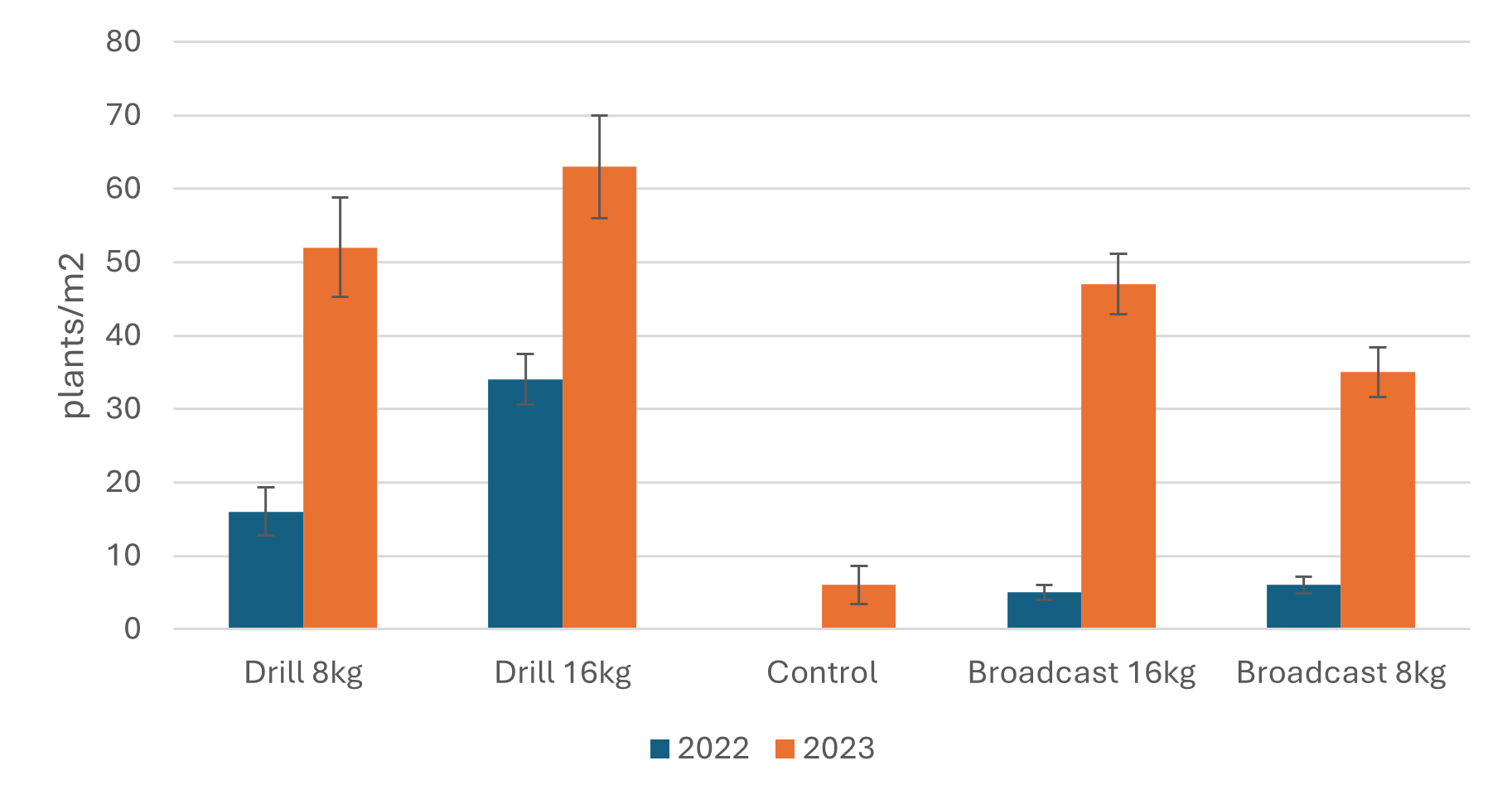 Figure 1.Sub clover seedling emergence numbers in plants/m2 for each treatment in July2022 and June 2023.
Managing post-sowing
As the new pasture emerges, it’s important to monitor for crickets, slugs and red-legged earth mites. There are many bait and insecticide options for control, so monitor closely as they can quickly destroy young seedlings.
Grazing can occur in winter once the pasture is adequately anchored. Once a plant starts growing its third leaf, it also begins to produce secondary roots, which anchor the plant more securely. A simple ‘pinch and twist’ test can be used to determine when grazing can start. A light graze can stimulate tillering and root growth, with adequate spelling following grazing.