
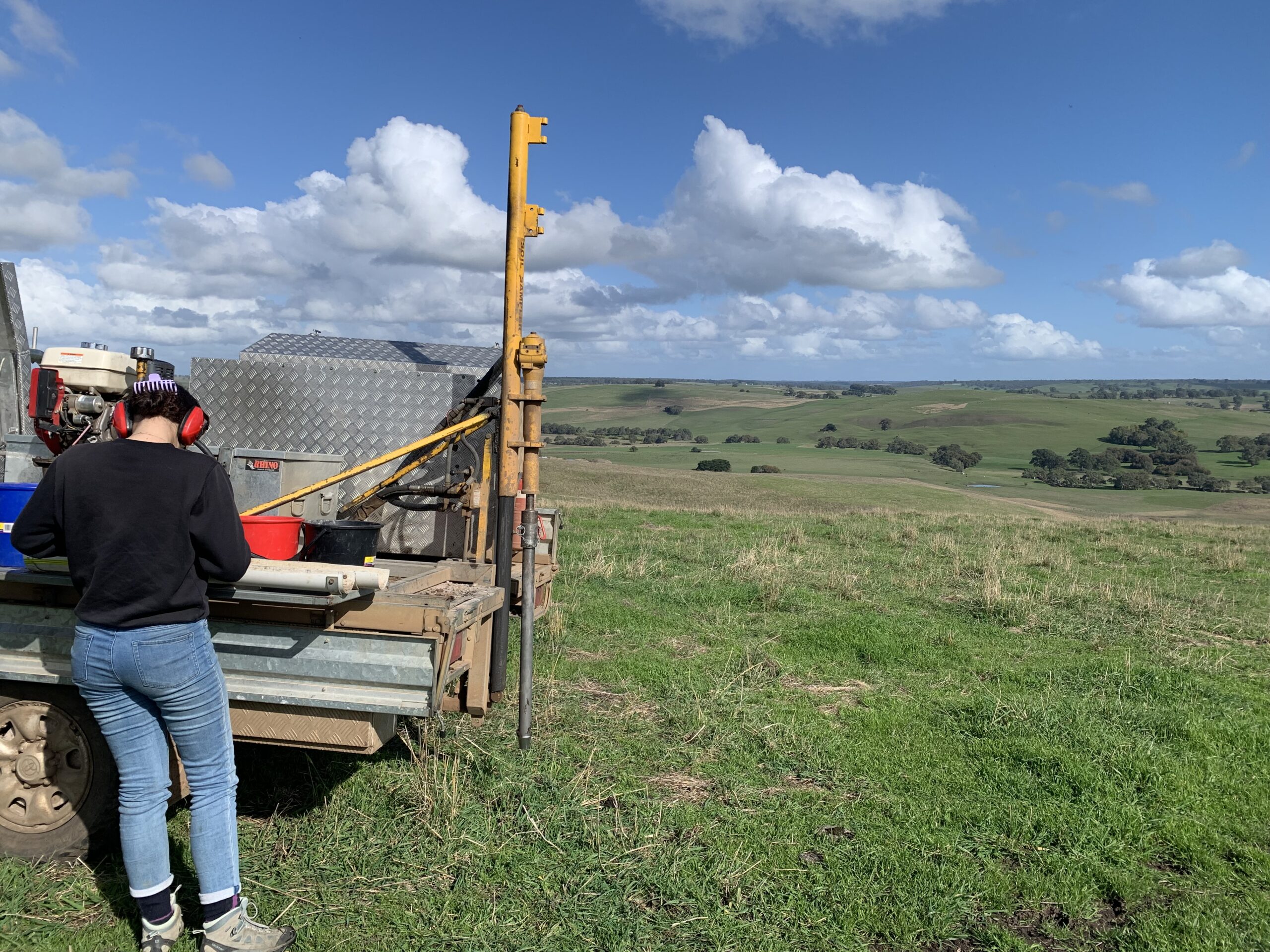
Utilising deep Nitrogen soil testing to make fertiliser decisions in winter months
As the cooler months set in, shifting focus to the maintenance of soil fertility with higher leaching conditions is becoming increasingly important.
With the Bureau of Meteorology recording approximately 70-100 mm of rainfall to date in June across South-west Victoria, it is particularly important to ensure soil Nitrogen (N) levels are kept to an adequate level given this recent wet period where some Nitrate leaching may have occurred.
Deep N soil testing can be a useful tool in determining necessary quantities of additional N application required to maximise yields this season. Soil testing can assist in ensuring desirable levels of soil N are met, whilst also avoiding excess application and unnecessary costs. The GRDC’s 2020 paper ‘A Nitrogen Reference Manual for the Southern Cropping Region’ proposes a formula to calculate the N requirement to achieve your yield targets, and indicates a target of 40kg N/ha per tonne of cereal production and approximately double this amount for canola.
In early 2022, the GRDC also advised growers to use soil sampling practices to accurately manage fertiliser requirements without purchasing excess, especially with ongoing disruptions to agricultural input supply chains and the resulting greater cost of fertiliser over recent years.
Whilst soil sampling may be slightly more difficult right now given wet ground conditions over recent weeks, sampling close to Nitrogen application in the winter period can provide a more accurate and updated information of your soil fertility to aid fertiliser decisions. Agriculture Victoria currently recommend matching fertiliser supply with predicted crop N demands via soil testing to also help minimise losses of Nitrogen through processes such as denitrification, leaching and volatilisation.
Consider using grid or paddock-wide sampling strategies to optimise fertiliser application, as this may also highlight zones of nutrient deficiencies. GRDC Paddock Practices publications on soil testing suggest targeting some specific areas in a paddock to show differences in soil N content caused by changes in soil type and topography across a paddock. For example, sampling from a high and low point, and in areas with loamy vs clay soil can highlight differences in soil N content.
Creating a plan for your Nitrogen application using soil testing data this winter not only assists you in reaching your yield potential but is also an efficient strategy to reduce the risk of over-spending on fertiliser this season.